

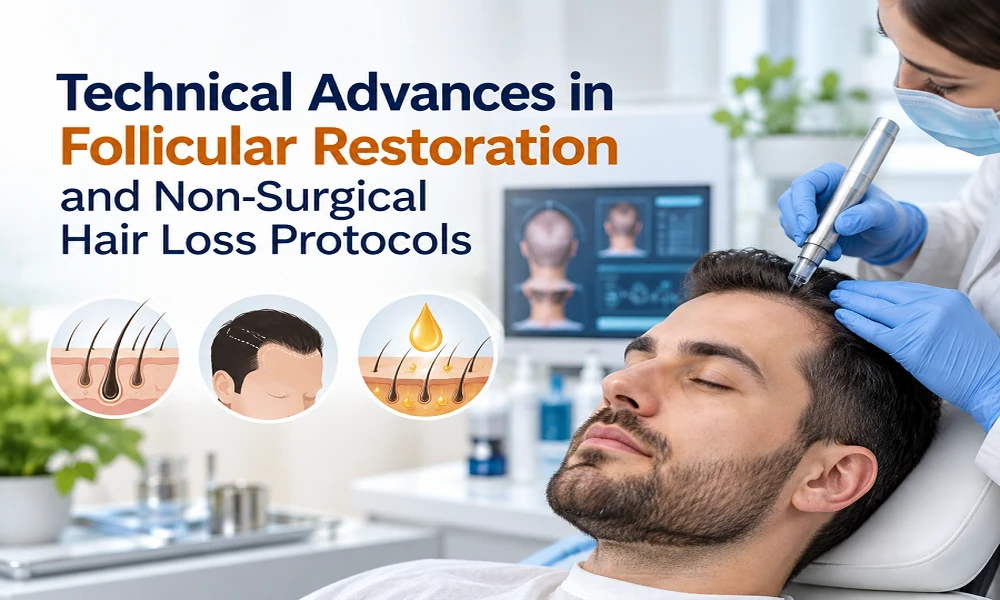
Alopecia and progressive follicle miniaturization present complex physiological challenges that require structured medical evaluation and surgical precision. Modern dermatological practices have shifted toward combined therapeutic workflows, integrating advanced surgical techniques with cellular biostimulation to maximize follicular viability and achieve natural hair density. For individuals seeking a permanent hair transplant in dubai, understanding the biological mechanics of follicle extraction, graft handling, and ongoing non-surgical hair loss treatment protocols is essential for achieving long-term success.
Etiology of Follicular Miniaturization and Diagnostic Evaluation
Hair loss is driven by a combination of hormonal sensitivities, micro-vascular insufficiency, and genetic predispositions. The most prevalent form, androgenetic alopecia, occurs when hair follicles sensitive to dihydrotestosterone (DHT) undergo progressive miniaturization. DHT shortens the anagen (growth) phase of the hair cycle while prolonging the telogen (resting) phase, causing terminal hair shafts to gradually transform into thin vellus hairs before the follicle ceases production entirely.
Before initiating any surgical intervention or prescription regimen, clinical evaluation utilizes digital trichoscopy and polarized light microscopy to analyze the scalp:
- Anagen-to-Telogen Ratio: Measuring the percentage of actively growing hairs versus shedding hairs to determine whether loss is driven by androgenic factors or temporary telogen effluvium.
- Follicular Unit Density: Quantifying the number of active follicular units per square centimeter in both the donor area (typically the occipital region) and the recipient thinning zone.
- Scalp Vascularity and Elasticity: Assessing tissue health, micro-capillary perfusion, and dermal thickness to confirm that the recipient site can support newly implanted micro-grafts.
Through comprehensive diagnostic mapping, clinicians establish whether a patient is an immediate candidate for surgical graft implantation or requires preliminary medical therapy to stabilize active hair shedding.
Advanced Surgical Methodologies in Follicular Extraction
Surgical restoration relies on relocating genetically resistant donor follicles from the back and sides of the scalp to areas experiencing thinning or receded hairlines. Modern surgical standards prioritize minimal graft transection and reduced donor site trauma through automated and micro-manual techniques.
Follicular Unit Extraction (FUE) and Sapphire Micro-Incision
Standard Follicular Unit Extraction involves isolating individual hair groupings (containing 1 to 4 hairs) using micro-punches ranging from 0.7 mm to 0.9 mm in diameter. Once donor grafts are extracted, recipient sites are prepared using specialized blades.
The integration of V-shaped sapphire blades has significantly advanced the incision phase. Unlike traditional steel instruments, sapphire points create micro-slits without tearing adjacent tissue, which reduces post-operative inflammation and enables higher packing density per square centimeter. FUE remains a preferred option for large-scale restorative procedures requiring high graft counts across extensive bald areas.
Direct Hair Implantation (DHI)
Direct Hair Implantation refines the classical FUE workflow by eliminating the need for pre-made recipient channels. Extracted grafts are loaded directly into specialized pen-like mechanical implanters fitted with hollow needles.
During implantation, the physician uses the device to penetrate the scalp and deposit the graft simultaneously. This mechanism allows precise control over the angle, direction, and depth of every individual follicle, ensuring that newly placed hairs align perfectly with natural growth patterns. DHI minimizes the time grafts spend outside the body, preserving cellular hydration and increasing overall survival rates.
Biological Graft Preservation and Tissue Perfusion
The survival rate of implanted hair follicles depends heavily on minimizing ischemic stress during the window between extraction and re-implantation. Once a graft is removed from the donor site, it is temporarily cut off from blood flow and oxygen supply.
To preserve cellular integrity, modern surgical units store harvested grafts in cooled hypothermic holding solutions enriched with antioxidants, ATP-producing precursors, and essential amino acids. Maintaining these solutions at optimized temperatures slows intracellular metabolism, preventing cell rupture and oxidative damage. Once implanted into recipient channels, micro-capillaries begin to revascularize the graft tissue within 48 to 72 hours, establishing a permanent blood supply.
Non-Surgical Cellular Therapies and Hair Loss Management
While surgical procedures redistribute existing hair follicles, non-surgical protocols focus on revitalizing dormant follicles and maintaining native, non-transplanted hair. Combining a surgical hair transplant in dubai with ongoing regenerative therapy yields optimal density and prevents future recession around implanted zones.
Autologous Platelet-Rich Plasma (PRP) and PRGF
Platelet-Rich Plasma therapy utilizes autologous blood components to deliver concentrated growth factors directly to the follicular matrix. Blood is drawn and centrifuged to separate red blood cells from plasma containing concentrated platelets. When injected into the dermal layer of the scalp, activated platelets release key signaling proteins, including:
- Vascular Endothelial Growth Factor (VEGF): Stimulates neo-angiogenesis, increasing micro-capillary formation around hair bulbs.
- Platelet-Derived Growth Factor (PDGF): Promotes cellular proliferation and prolongs the anagen growth phase.
- Transforming Growth Factor-Beta (TGF-β): Regulates tissue remodeling and supports cellular matrix repair.
Periodic sessions of autologous plasma injections improve hair shaft diameter, slow down progressive thinning, and accelerate tissue recovery following surgical implantation.
Exosome and Stem Cell-Derived Signaling
Exosome therapy represents an advanced evolution in cell-free regenerative medicine. Exosomes are extracellular vesicles secreted by progenitor cells that carry RNA, microRNA, and regulatory proteins. When administered via targeted micro-injections into the scalp, exosomes deliver intercellular messages that trigger dormant stem cells inside the hair follicle bulge. This signaling pathway helps reawaken miniaturized follicles, reduces local inflammatory cascades, and supports overall tissue rejuvenation without requiring autologous blood preparation.
Scalp Mesotherapy and Targeted Pharmacotherapy
Mesotherapy delivers localized micro-injections of custom pharmacological blends directly into the mesoderm. These solutions combine vitamins, minerals, amino acids, and localized 5-alpha-reductase inhibitors to neutralize DHT activity locally at the follicle root without systemic exposure.
In parallel, long-term non-surgical management often incorporates topical or oral vasodilators to increase blood flow, as well as systemic DHT-blocking agents to halt progressive genetic loss.
Post-Operative Care Protocols and Long-Term Maintenance
Achieving permanent hair density requires strict adherence to post-procedure recovery protocols. During the initial 10 to 14 days following surgery, implanted follicles remain delicate while anchoring into dermal tissue. Patients follow structured care routines that include gentle antimicrobial washes, saline hydration sprays, and avoiding direct pressure or friction on recipient areas.
Between 2 and 6 weeks post-surgery, transplanted hair shafts undergo a physiological shedding phase known as shock loss. This shedding is a normal reaction to transient surgical trauma; the root structures remain intact beneath the skin and enter a resting state before initiating new terminal growth between months 3 and 4. Full maturation, shaft thickening, and final visual density are typically evaluated between 10 and 12 months post-procedure.
Integrating targeted medical treatments alongside surgical intervention ensures comprehensive management of androgenetic alopecia. By combining precise extraction techniques with advanced non-surgical hair loss treatment protocols, patients achieve natural, durable hair restoration tailored to their unique scalp biology.