

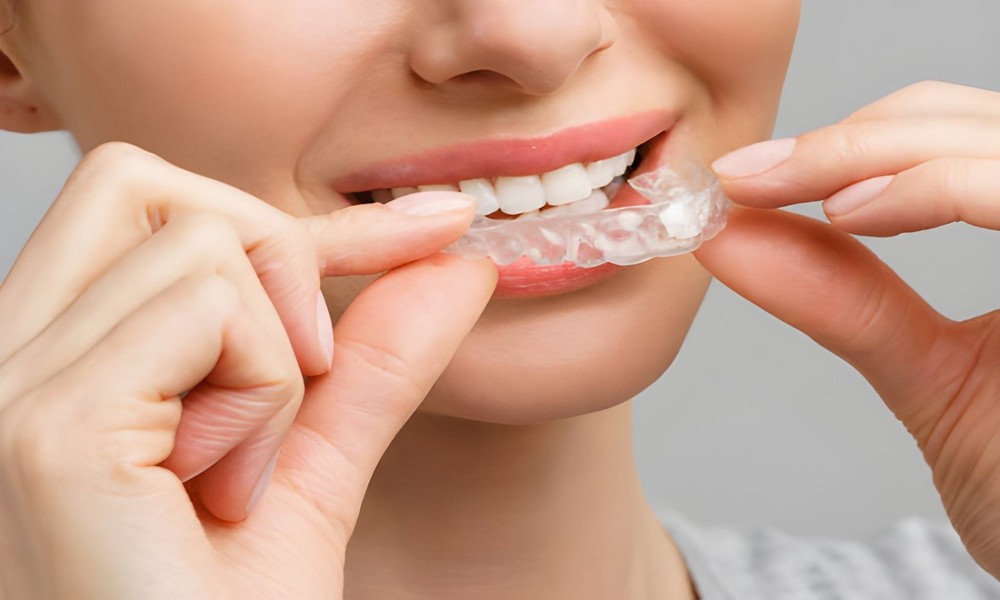
If you have ever looked at Invisalign and thought, “Wait, how can something this thin actually move teeth?” you are not alone. It almost feels too simple to be true. No wires, no brackets, no dramatic tightening appointments. Just clear trays. But behind that simplicity, there is some pretty fascinating science quietly doing its job.
Invisalign treatment works through a series of custom-made trays that are designed specifically for your teeth. Clinics like Clinebell & Anderson use advanced digital scans to map out your entire smile journey before you even begin. With Invisalign clear aligners, each tray is slightly different from the last, guiding your teeth step-by-step into better alignment.
It is not random at all; it is planned with surprising precision, almost like your smile is following a blueprint.
So, what is actually happening inside your mouth?
At its core, Invisalign relies on one simple idea gentle, consistent pressure.
- Each aligner applies controlled force to specific teeth
- The pressure is light, but very intentional
- Over time, teeth begin to shift into new positions
This is not guesswork. Every movement is calculated in advance using 3D imaging and treatment planning.
The biology part
Your teeth are not stuck in place as rigidly as they seem. They are held by a flexible structure called the periodontal ligament.
- When aligners apply pressure, then one side of the ligament compresses
- The opposite side stretches
- Your body responds by:
- Breaking down bone where pressure is applied
- Building new bone where space is created
This process is called bone remodeling, and it is the real reason your teeth can move safely. Honestly, it is kind of amazing that your body just adapts like that.
Why does it feel gentler than braces?
A lot of people expect pain, but Invisalign usually feels more like pressure than pain.

Here is why:
- Movements are small and gradual, not sudden
- You switch aligners every 1-2 weeks
- Each new tray continues the progress from the last
Because of this step-by-step approach, the process feels more manageable.
A few things that make Invisalign work so well
- Custom fit: Each aligner is made just for your teeth
- Consistency: You need to wear them 20-22 hours a day
- Attachments: Small tooth-colored bumps help guide tricky movements
- Digital precision: Your entire treatment is pre-planned from start to finish
The emotional side of it
There is something really comforting about the way Invisalign works. It is not aggressive or overwhelming. It is slow, quiet progress. You might not notice changes day-to-day, but then one morning, you do a double-take in the mirror. And that moment, it feels worth it.
Invisalign is not magic (even though it kind of looks like it). It is a combination of smart technology, careful planning, and your body’s natural ability to adapt. Gentle pressure, tiny movements, steady progress, that is really the secret behind how your smile transforms. And honestly, it is a pretty cool one.